
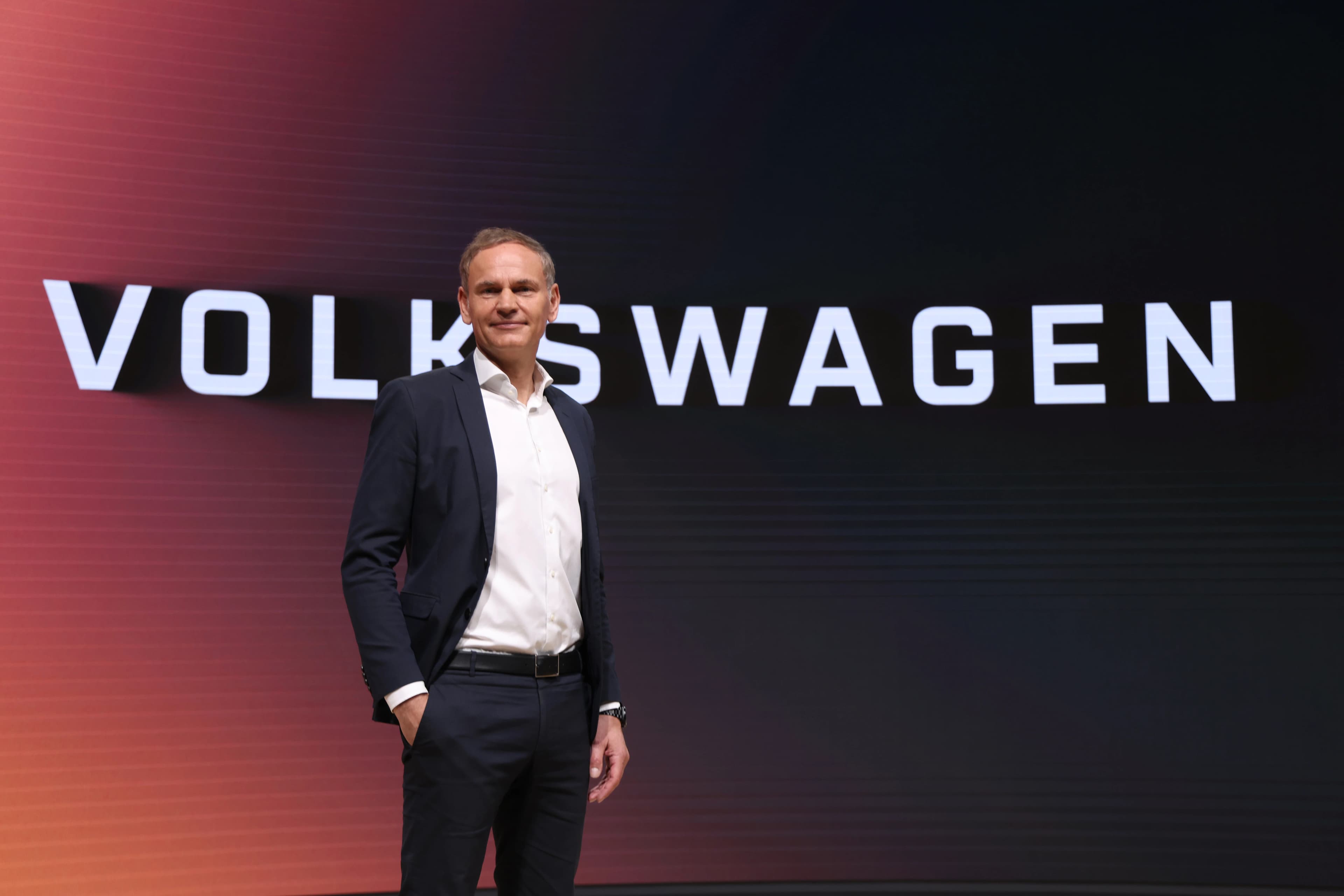
Volkswagen chief executive Oliver Blume presented the group's new European strategy in Paris this month, betting the company's recovery on a family of small, affordably priced electric cars built on the continent for European drivers. Called For Europe, the plan leans directly into the line Blume used to describe it: Europe, he said, is not a market for Volkswagen, it is the company's home, its cradle.
The centerpiece is a set of four urban electric models built in Spain: the Volkswagen ID. Polo, the Volkswagen ID. Cross, the Skoda Epiq and the Cupra Raval, sharing underlying technology across the group's brands while each is styled and tuned for its own badge. Volkswagen says the four models had already drawn nearly 150,000 preorders before a single car had been delivered. Werner Tietz, the group's head of research and development, described the approach behind the family as sharing technology where it creates value for the customer and keeping each brand distinct where customers can actually tell the difference.
The urgency behind the plan is capacity Volkswagen does not currently need. The group estimates roughly 500,000 vehicles a year of excess production capacity across its European plants, concentrated at sites including Emden, Hannover, Zwickau and Neckarsulm. The broader plan calls for cutting output capacity by about a million vehicles, bringing the group's total down to roughly nine million a year, a reduction that falls directly on the same German plants carrying the overcapacity now.