
The common thread running through Europe's most interesting young chefs right now is not a shared technique or a shared country, it is a refusal to cook the way the restaurant down the street does. A new selection of nine names to watch, most of them working far from the capitals that usually claim culinary attention, makes the case that the most original food in Europe is currently happening in a Swedish forest, a Basque village and a converted grand hotel kitchen in Zurich rather than in the usual fine dining strongholds.
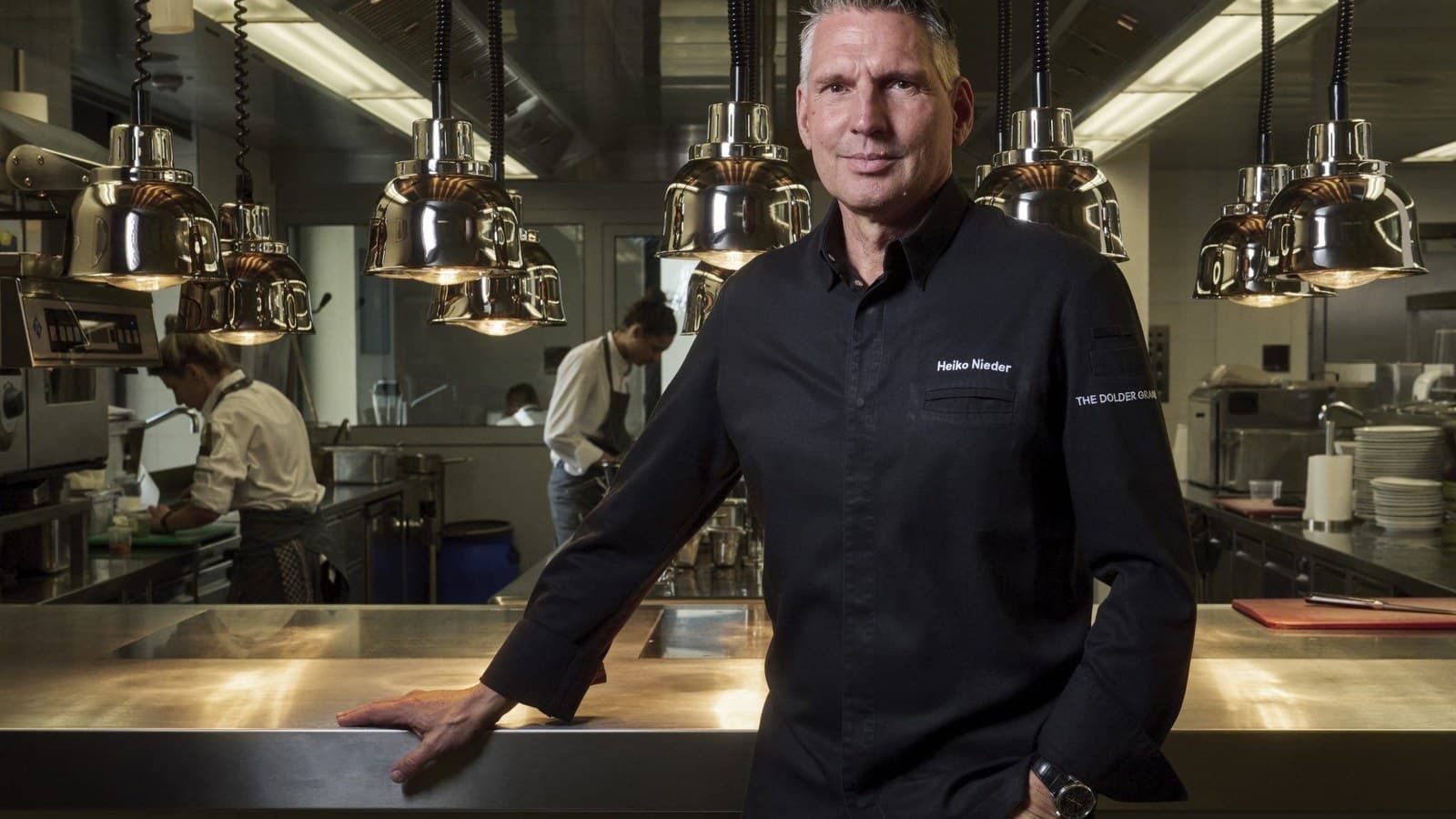
Heiko Nieder, at The Restaurant inside Zurich's Dolder Grand, is the most established name on the list, having held two Michelin stars since 2008, a run of consistency rare in a field that prizes reinvention. What keeps him on a list built around newer names is less longevity than restlessness, Nieder builds his cooking around curiosity itself, layering Asian aromatic influences into a kitchen most guests would expect to stay firmly European, and treating balance of aroma as seriously as most chefs treat balance of flavor.
Fire shows up again and again as the organizing idea for several of the others. Nicolai Tram cooks over open flame at Knystaforsen in rural Sweden, working closely with local producers and the forest around the restaurant to earn a Michelin star and a green star for sustainability. Stefan Doubek in Vienna has gone further still, running a kitchen with no modern stovetop at all, cooking exclusively over fire in a visible kitchen that treats smoke as an ingredient rather than a byproduct, blending Nordic and Japanese influences in the process. In the Basque country, Tetsuro Maeda, who trained under Victor Arguinzoniz, applies Japanese precision to that same fire culture at Txispa, growing around 90 percent of his ingredients himself and fermenting kitchen waste into miso and soy sauce rather than throwing it away.
Others are working through memory and identity rather than technique alone. Tohru Nakamura, who holds three Michelin stars at Tohru in der Schreiberei in Munich, cooks kaiseki built from Bavarian ingredients, a direct expression of his own Japanese German background. In Portugal, Hans Neuner traced the old maritime trade routes that once connected the country to Goa, Mozambique, Macau, Brazil and Hawaii to build his new Essencia menu at Ocean in the Algarve, turning centuries of colonial trade history into a tasting menu. Rene Frank in Berlin brings pastry technique into savory cooking at CODA, blurring the line between sweet and savory without leaning on refined sugar to do it.
The youngest name on the list may be the most telling about where the category is headed. Alejandro Serrano earned a Michelin star at 24 at his own restaurant in Miranda de Ebro, building a concept he calls the Sea of Castile, an imagined coastline for a landlocked region, explicitly aimed at bringing fine dining to a younger generation that has mostly experienced it as something aspirational rather than accessible. Alongside Alain Weissgerber's biodynamic, land focused cooking at Taubenkobel in Austria, the list adds up to less a single trend than a shared instinct, that the most interesting food right now comes from chefs building an entire worldview around one idea and refusing to dilute it.