
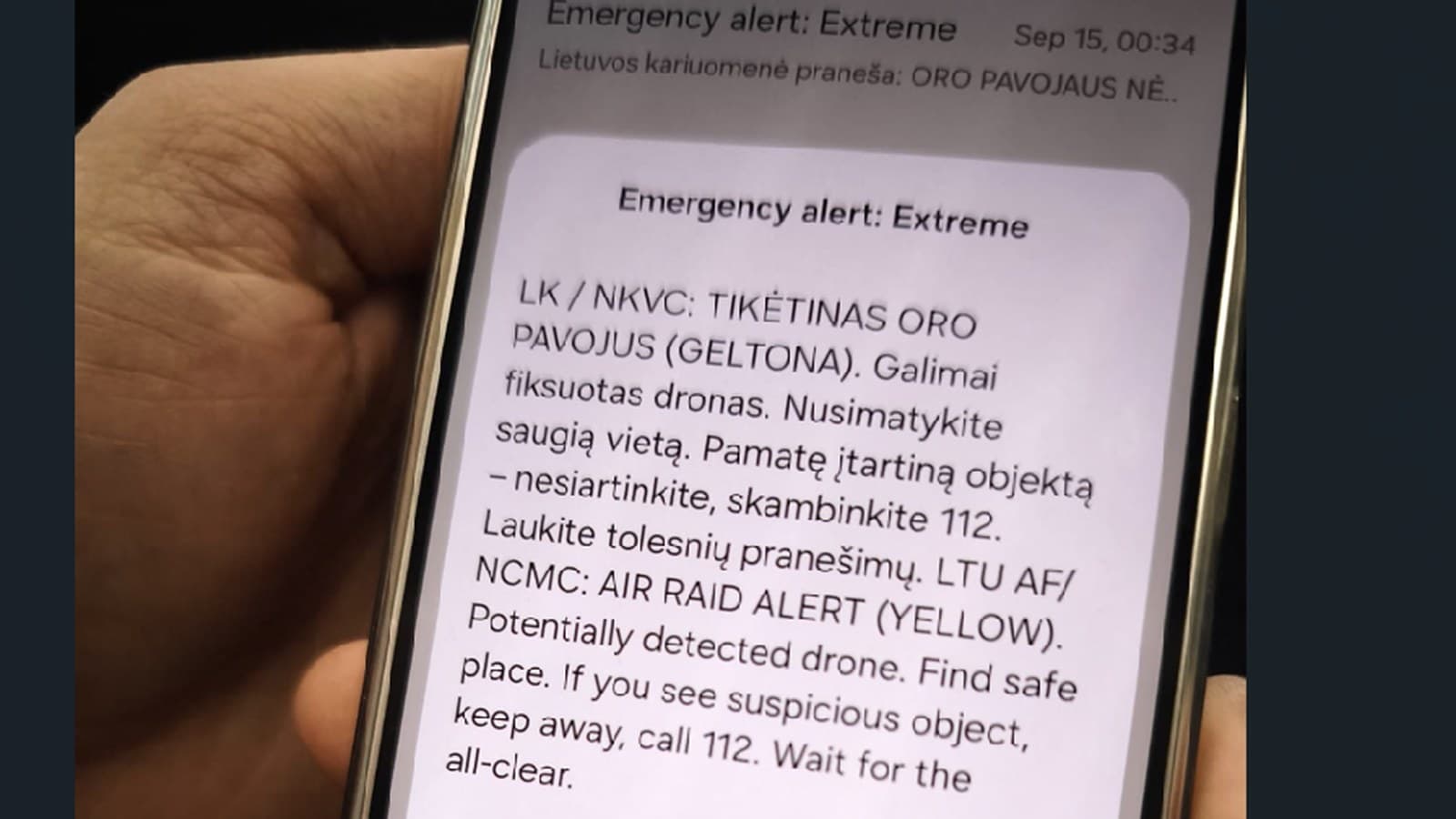
An Italian fighter jet flying under NATO's Baltic air policing mission shot down a suspected Russian drone over southern Lithuania in the early hours of September 15, intercepting it near the village of Pratkunai, close to Kaunas, after it crossed into Lithuanian airspace from Belarus. Italian Defense Minister Guido Crosetto said the drone most probably originated from Russia, a description that stopped short of a formal accusation while leaving little doubt about where Rome and Vilnius believe it came from.
Ukrainian military sources examining the wreckage said it was consistent with a Geran-2, the long range attack drone Russia has built and launched by the thousands against Ukrainian cities and infrastructure since the start of the full scale invasion. Lithuania's defense minister, Robertas Kaunas, said on social media that the drone was carrying explosives, a detail that turns the incident from an airspace violation into a live weapon reaching NATO territory rather than an errant surveillance flight.
It is the first confirmed Russian drone intrusion into Lithuania since the summer of 2025, when two Russian drones crashed inside the country's borders in what was treated at the time as accidental rather than deliberate. NATO jets have intercepted stray drones over the Baltic states before, but those cases involved Ukrainian drones drifting off course during strikes on Russian targets, not aircraft crossing directly out of Belarus into alliance territory.
For Crosetto, the interception was also a chance to make a point about Italy's place inside NATO at a moment when that commitment has faced domestic political pressure. The presence of Italian aircraft here, he said, is the clear demonstration of the value of the Atlantic alliance for Italy and what it means to be an ally, framing an Italian jet shooting down a Russian drone over Lithuanian soil as evidence the alliance still functions exactly as designed.
Russia did not immediately comment on the incident. Whether that silence reflects uncertainty about what happened, indifference, or simple unwillingness to acknowledge a drone armed with explosives reaching NATO airspace is not yet clear, but the incident adds Lithuania to the growing list of alliance members where a Russian or Russian linked aircraft has forced a live response rather than a diplomatic one.