
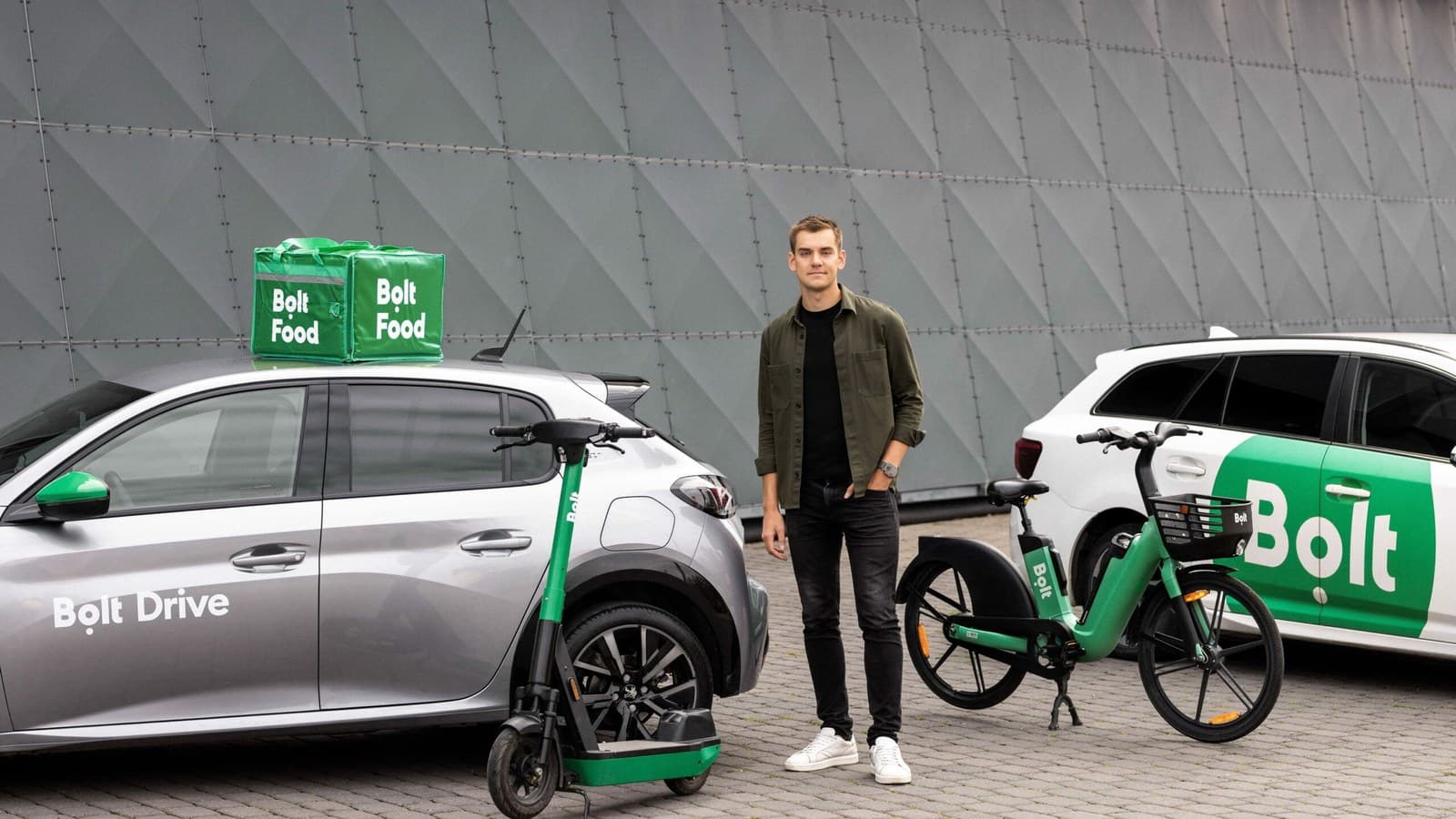
Markus Villig was twenty years old in August 2013 when he borrowed about 6.000 dollars from his parents, money set aside for his university education, and used it to start a ride hailing company instead. Thirteen years later that company is Bolt, Europe's closest thing to a direct answer to Uber, and Villig, still only in his early thirties, is a billionaire running it from the same city where he started, Tallinn.
The early growth came fast by the standards of European startups. Bolt crossed a 1 billion dollar valuation in 2019, making Villig the youngest unicorn founder in Europe at 25, and a funding round in 2021 pushed that figure to 8,4 billion dollars, the point at which his stake made him a billionaire on paper. What has kept him one is that the business behind the valuation actually works, Bolt generated 3 billion dollars in revenue in 2025 and posted positive cash flow for the second year running, a rarer achievement among ride hailing companies than the funding headlines usually suggest.
Villig built that position by avoiding a direct fight with Uber in the markets Uber already dominated. Instead Bolt pushed into Eastern Europe and Africa, regions the larger American company had left underserved, while keeping costs down by running the company out of Tallinn rather than a Silicon Valley office and charging drivers lower commissions than competitors did. The formula now spans more than 50 countries and 600 cities, covering ride hailing, food delivery through Bolt Food, e-bikes, scooters and car sharing for roughly 200 million customers, with total transaction volume across the platform reaching 14 billion dollars.
Italy is the newest addition to that map. Bolt launched in Milan in the middle of June 2026, its entry point into a market where local taxi rules and incumbent operators have made life difficult for ride hailing apps before. Whether Bolt's low cost, high volume model translates to Italian streets the way it did in Nairobi or Warsaw is still an open question, but it is one the company clearly believes is worth answering.
Villig's next bet reaches further than any single new city. Bolt has partnered with Nvidia and Pony.ai to bring autonomous vehicles onto its platform, aiming for 100.000 self driving cars by 2035, with a pilot already running in Luxembourg where the company plans to put up to 30 robotaxis on the road. It is a long way from 6.000 borrowed dollars, and an even longer way from proven, but it is the direction Villig has decided a company built on drivers should now take without them.