
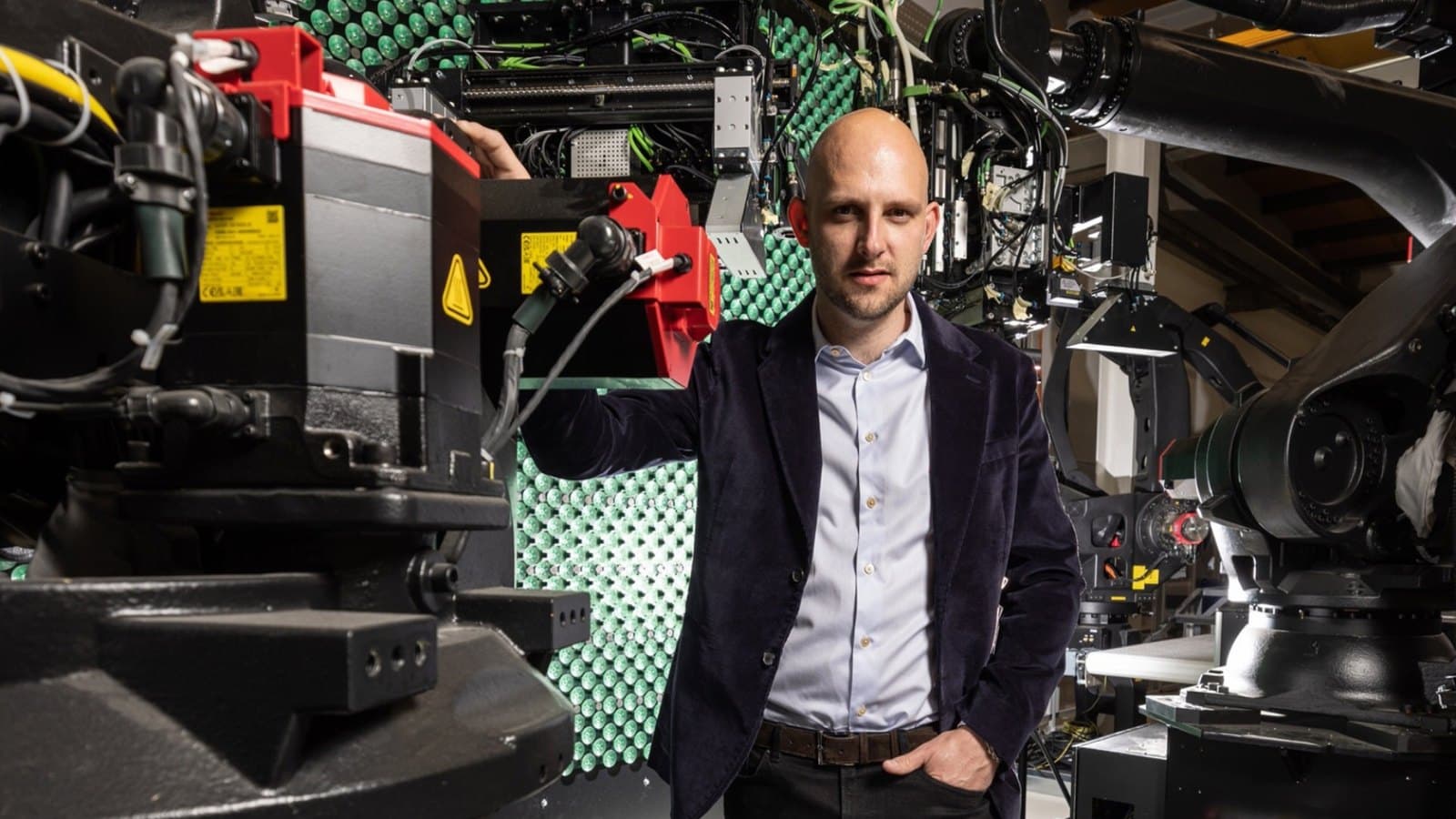
Most construction startups that bet on deep technology and long capital cycles do not come out the other side of a property downturn. LEKO Labs did. Founded in Luxembourg in 2017 by François Cordier, the company spent close to ten years building an industrialised insulated timber superstructure system that combines algorithmic design, robotic production and off site manufacturing to deliver low carbon buildings at scale. Behind it sit 30 million euros raised, a million hours of engineering, nine patents and roughly 500 homes delivered across the Benelux.
The number that matters is not the raise. After years of heavy investment and a painful restructuring while the wider construction sector hit a wall, the company came out of 2025 with a positive Ebitda of 0,7 million euros. For a deeptech in that environment it is unusual, and it is the proof of concept for the whole industrial model.
Cordier puts the purpose of the new money plainly: the company is not raising to secure runway but to accelerate a model that has demonstrated its industrial viability. The round was closed with existing shareholders and is an intermediate step ahead of a Series B targeted for late 2026 or early 2027. Signing programmes covering several tens of thousands of square metres requires significant growth capital, he says, and it is that scaling phase that led the historical investors to renew their confidence.
Those investors describe the same thing from the other side. Keith O'Donnell, a historical investor in the company, said what stood out was the team's discipline and its ability to execute, that LEKO Labs stayed the course and demonstrated the relevance of its business model, and that the combination of resilience and commercial traction is what led him to renew his support. Frédéric Van den Weghe, managing partner at AMAVI Capital, framed the wider case: Europe faces a housing crisis and a carbon imperative at the same time, and LEKO Labs shows it is possible to act on both through an industrial and technological approach developed in Europe.
France, the DACH region and the Nordic countries are the next targets, each chosen for structural reasons that run from regulatory pressure to an existing culture of building in timber. The scale up is meant to run on a network of licensed robofactories placed close to construction sites rather than on one central plant. Nearly ten years in, the company is a working industrial platform that is profitable and funded. The Series B will decide how far it goes.