
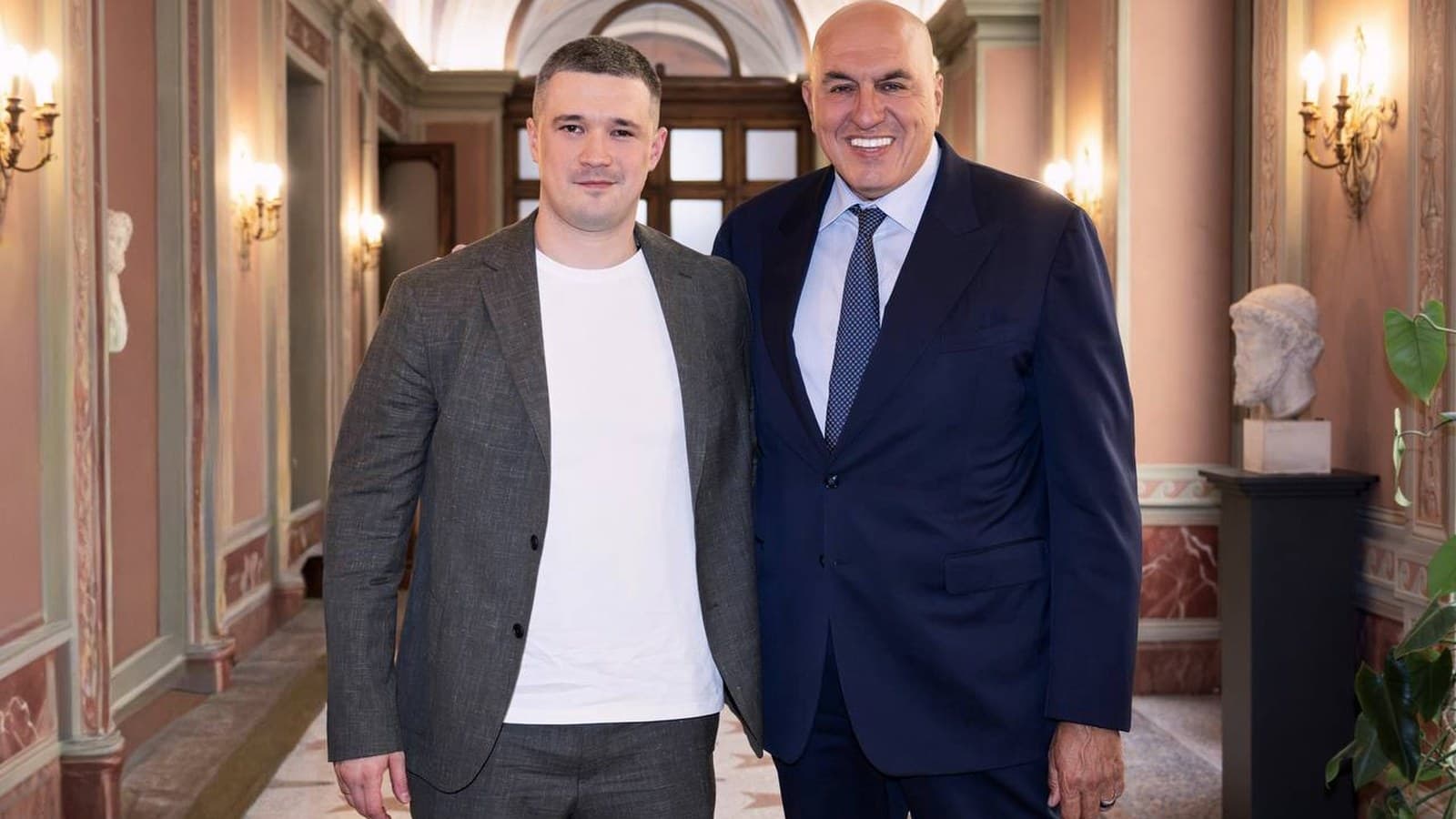
Mykhailo Fedorov ran Ukraine's Ministry of Defense for six months, from January 2026 until mid July, when he left the post after what has been widely attributed to a clash with Oleksandr Syrskyi, the commander in chief of Ukraine's armed forces. Six weeks later, Fedorov has a new job, and it is not in Ukraine. Italy's defense minister Guido Crosetto has brought him on as an adviser focused on defense innovation, a role Fedorov himself has described as helping Italy build modern warfare technology and adapt its defense sector to new global security threats.
The appointment, announced August 28, follows a meeting between the two men in Rome where they discussed drones, autonomous systems, air defense and how to build out a defense technology ecosystem, the kind of agenda that reads like a direct import of the priorities Fedorov pushed inside Ukraine's own ministry. Ukraine has spent more than three years turning wartime necessity into one of the fastest weapons development cycles in the world, and Crosetto's hire is a fairly explicit bet that some of that speed can be transplanted into an Italian defense industry that, like most of its European counterparts, still moves on a procurement timeline built for peacetime.
Fedorov has been careful to frame the Italian role as an addition rather than a departure. He has said his primary focus remains work inside Ukraine, on projects meant to strengthen its own defenses and attract international resources, and has argued that Ukraine's accumulated wartime experience could become the foundation for a broader European defense model, one that combines technology, manufacturing capacity and the ability to scale innovation quickly rather than over years.
For Crosetto, the hire fits a pattern that has become common across European defense ministries since the war began, recruiting the people who learned to build and deploy drones and autonomous systems under fire rather than trying to reconstruct that knowledge from procurement manuals. What is less common is doing it with a country's own former defense minister, a title that gives Fedorov's advice in Rome a weight most consultants brought in from Ukraine's tech and defense sector would not carry.