
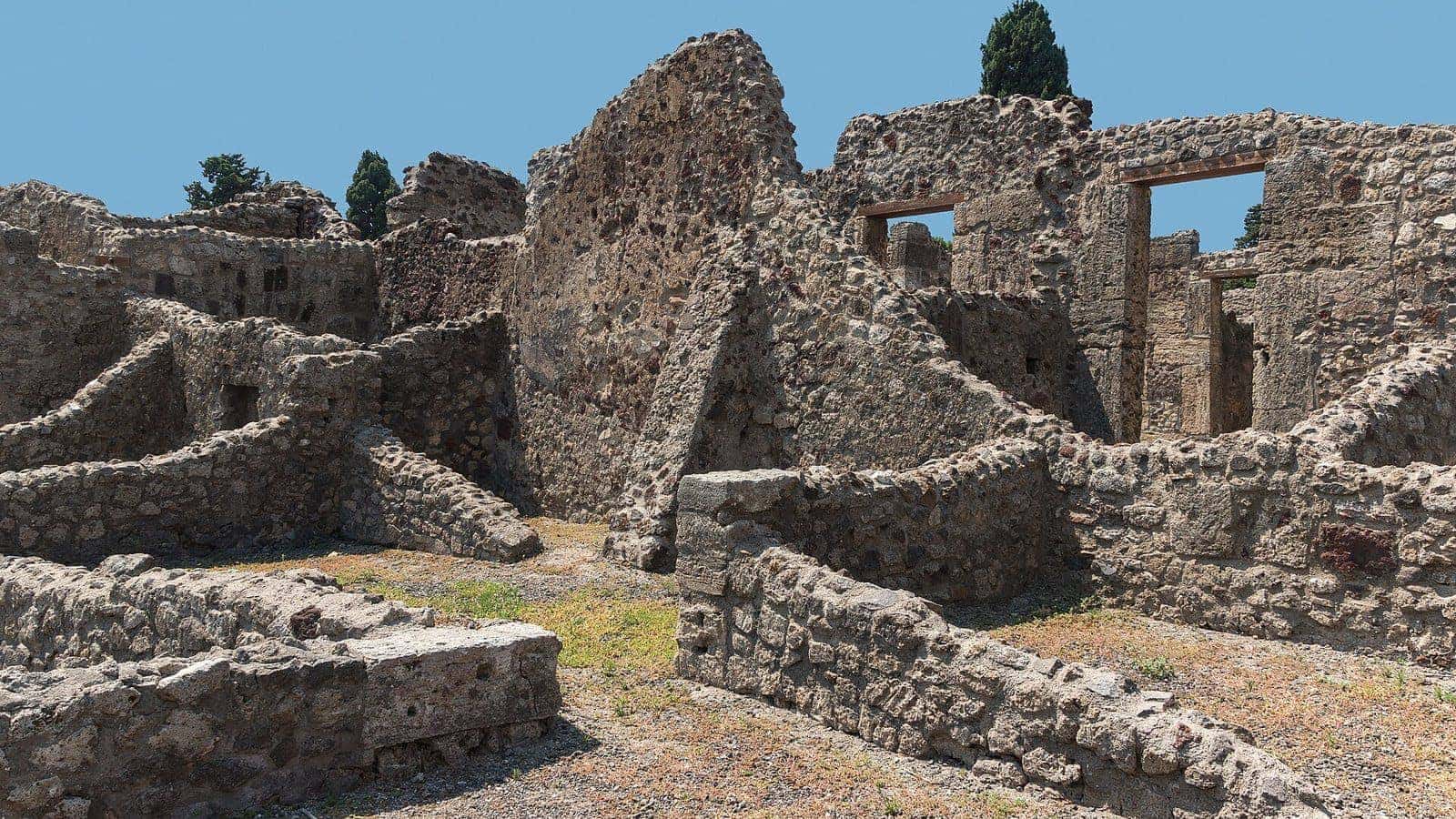
The instinctive answer to too many visitors at a heritage site is to let fewer in. Pompeii has spent several years testing the opposite approach: open more of the excavated area, spread the route, and let the crowd thin itself across a larger surface.
It works better than a cap, for a reason that is about behaviour rather than arithmetic. Visitors to a large archaeological site follow a small number of legible paths, and congestion concentrates where those paths meet. Adding a restored block with its own entrance and its own reason to be visited does not just add capacity, it redistributes the flow, because a share of visitors will take a route they had not planned if it is marked and open.
The cost of this approach is that it is permanent. A restored insula that has been added to the route has to stay in the route, which means it has to be maintained, monitored, and staffed. Restoration budgets in Italian heritage have historically been project shaped: a grant, a scaffold, a reopening, a photograph. Maintenance budgets are not shaped like that, and the gap between the two is where restored buildings quietly go back onto the closed list.
The site's own answer has been to treat maintenance as a continuous programme with its own staff rather than as a series of interventions, which is unglamorous and correct. Whether it survives a change of leadership is the open question, because the political reward for opening a house is immediate and the reward for keeping one open is nothing at all.