
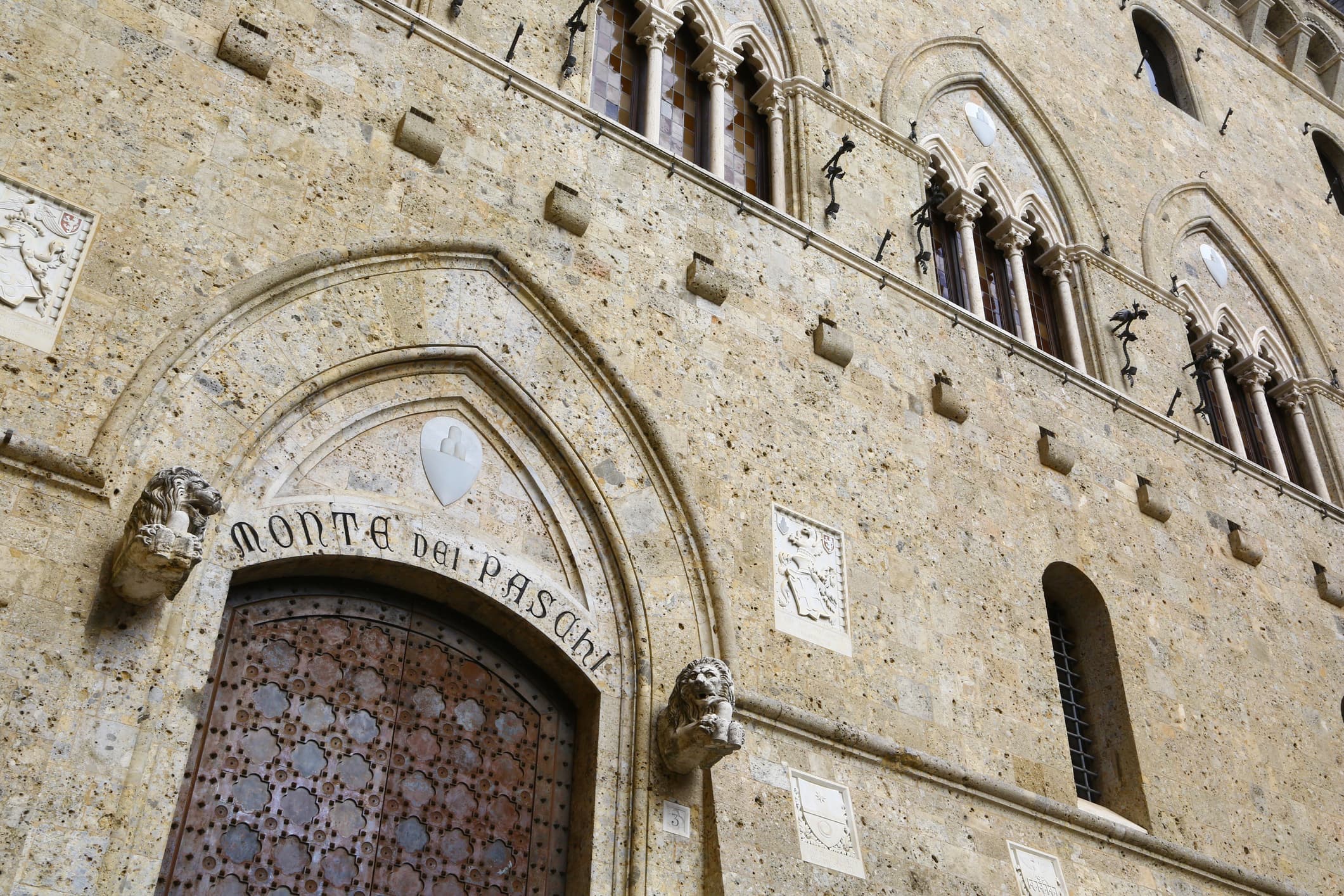
Monte dei Paschi di Siena has put on the table an industrial and financial plan worth 34 billion euros which, according to a report by Forbes Italia, represents CEO Luigi Lovaglio's response to Intesa Sanpaolo's attempts to strengthen its grip on the Italian banking system. The move marks a new chapter in the banking consolidation game that has been dominating headlines in Siena, Milan and Rome for months.
At the center of the project are two key names: Banco Bpm and Banca Generali. According to Forbes Italia's reconstruction, the two entities form the pillars on which Mps intends to build a hub as an alternative to the one designed by Intesa Sanpaolo, seeking to redraw the balance of the national banking and insurance sector before Intesa can dictate the pace of consolidation.
The choice to focus on Banco Bpm is not accidental. The institution led by Giuseppe Castagna has long been watched with interest by Italy's and Europe's major banking groups as a possible piece of future integrations. Involving Banco Bpm in Mps's project would mean removing it from any potential ambitions of Intesa Sanpaolo, which in recent years has repeatedly shown its ambition to further consolidate its leadership in the Italian credit market.
Banca Generali, for its part, adds to the plan an asset management and wealth management component that would round out the offering of a banking group expanded around Mps. The inclusion of this asset in the strategic design signals Siena's intention not to limit itself to size growth in traditional credit, but to build a group capable of competing on multiple fronts with the sector's major players.
The success of the operation, however, does not depend solely on the will of Mps and its leadership. As Forbes Italia points out, the 34 billion plan needs the consent of two decisive shareholders: Crédit Agricole, Banco Bpm's leading shareholder with a significant stake, and Generali, the insurance company known as the Leone di Trieste, which controls Banca Generali. Without the green light from these two players, Lovaglio's design risks remaining on paper.
Crédit Agricole probably represents the most delicate unknown. In recent years, the French group has built an increasingly significant presence in Banco Bpm's capital, positioning itself as an unavoidable counterpart for any operation involving the Milan-based institution. Its assent to the Mps plan would change the scenarios of Italian banking consolidation, while its refusal could push Banco Bpm toward other solutions, including those favored by Intesa Sanpaolo.
Similarly, Generali's position will be decisive. The Trieste-based company, led by the management installed after the recent turbulence over its ownership structure, will have to assess whether the sale of, or involvement of, Banca Generali in the Mps project is consistent with its own long-term strategy in asset management, or whether it prefers to maintain the current setup or explore alternative alliances.
The context in which this maneuver takes place is that of an Italian banking sector in the midst of reorganization. After Mps's return to the market through the privatization process that followed the public bailout of recent years, the Siena-based institution has progressively regained capital solidity, to the point that it can now afford to play a leading role rather than a passive one in the sector's consolidation dynamics.
For Lovaglio, who took the helm of Mps with a mandate to restore its finances and return the institution to fully market-based management, the 34 billion plan also represents a test of credibility toward investors and toward Rome, which, although it has reduced its stake in the bank, remains a close observer of the strategic choices of an institution historically tied to the country's economic and political fortunes.
Intesa Sanpaolo, led by Carlo Messina, is watching developments closely. The Turin-based group has repeatedly reaffirmed its intention to strengthen its leadership position in the Italian banking system, and a possible alliance between Mps, Banco Bpm and Banca Generali would bring about the emergence of a more structured competitor capable of reducing Intesa Sanpaolo's own room for maneuver in certain key market segments.
In the coming weeks it will be crucial to follow the moves of Crédit Agricole and Generali, whose positioning will determine whether Lovaglio's plan can truly translate into a concrete operation or whether it will remain one of the many scenarios hypothesized in Italian banking consolidation. Meanwhile, the market is watching Siena closely, aware that the outcome of this contest will shape structures destined to last for years.