
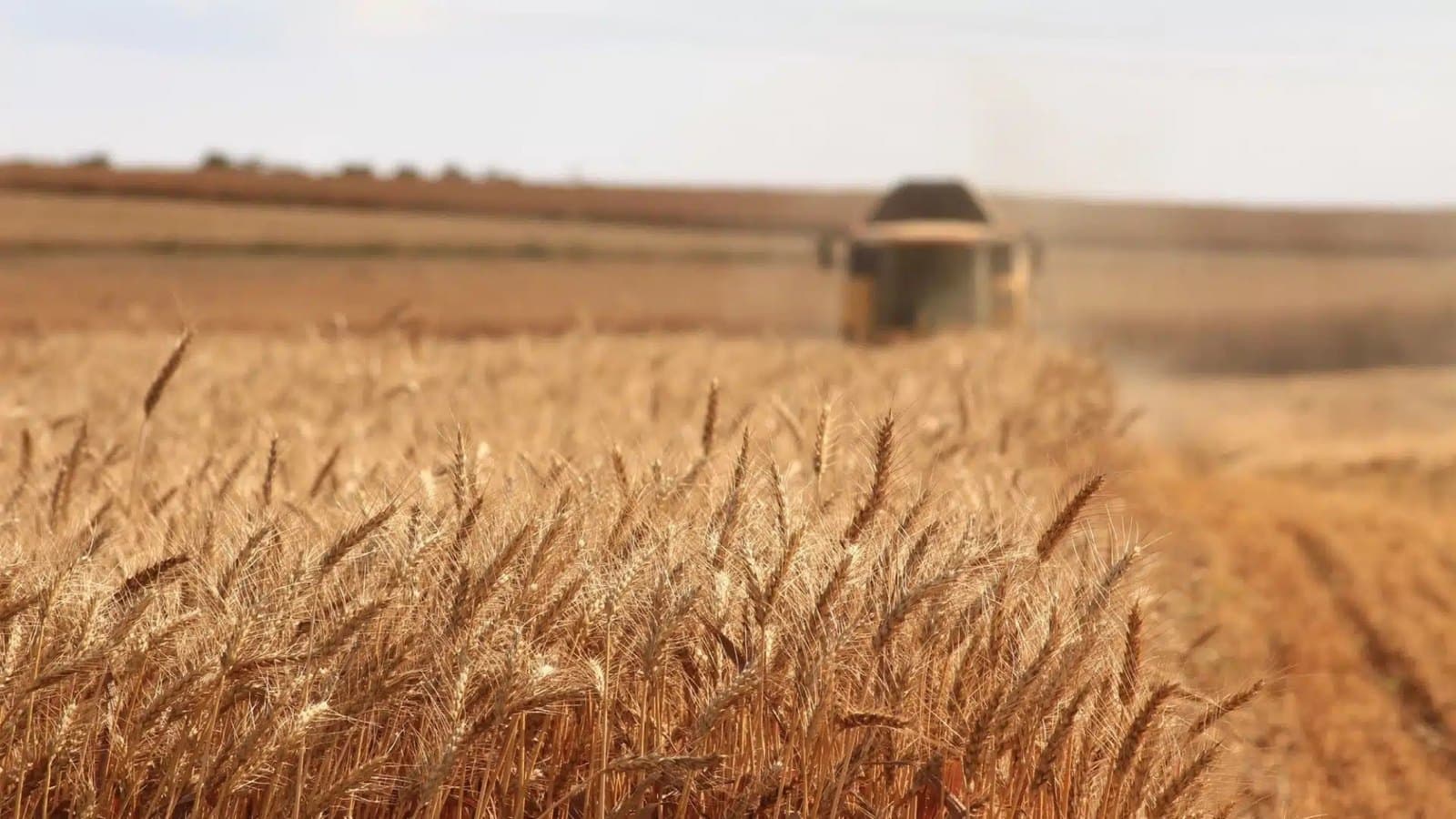
Italian agrifood holds its position as Europe's leader in 2026, with 16,9 percent of the European Union total, ahead of Spain at 16,5 percent, France at 13,7 percent and Germany at 12,9 percent. The whole sector generates added value of about 89 billion euros, split between 46,6 billion from agriculture, forestry and fishing and 42,3 billion from food manufacturing. The picture comes from the agrifood economy report by the research and innovation office of Bper Banca.
Exports set a record in 2025 at more than 72 billion euros, up 5 percent, with Germany at 11,2 billion, France at 7,9 billion and the United States at 7,4 billion as the largest destinations. Imports passed 73 billion and grew 10,5 percent, which worsens the overall balance. That is not a general loss of competitiveness. It comes from faster growth in imports of primary agricultural products, up 18 percent, bought both for consumption and to feed the food industry, which itself still runs a surplus.
The American market is the visible problem. Exports there fell to 7,4 billion euros while imports reached 1,7 billion, and the deterioration is concentrated in food manufacturing, above all in drinks. Beer fell 71 percent, spirits 14,9 percent, oil 20,5 percent and wine 9,2 percent. Trade with Mercosur is structurally unbalanced in a different way, with Italian exports flat in 2025 at minus 1 percent while imports rose 16,7 percent, though much of what comes from Mercosur is agro industrial input and tropical goods such as coffee, cocoa, tea and oilseeds, which Italy imports as a matter of course and adds value to in processing.
Costs are the other pressure. Geopolitical tension from the crisis in the Middle East and the closure of the Strait of Hormuz has hit agricultural inputs hard. In the first months of 2026 energy product prices rose 25 percent, fuels 44,5 percent and fertilisers 9 percent.
Against that, investment in technology is accelerating. Italian agrifood firms are adopting digital tools and artificial intelligence, from management software to decision support systems and crop mapping, with productivity as the goal. The Agriculture 4.0 market returned to growth in 2025 and reached 2,5 billion euros, up 9 percent. The caveat matters: a bigger market does not necessarily mean more digitised companies, since much of the growth reflects heavier use by firms that were already the most digitally mature. What comes next runs through further artificial intelligence, blockchain, robotics, alternative protein production and digital twins.
Risk management remains thin. Insured values under subsidised agricultural policies reached about 9,94 billion euros in 2025, up 3 percent on 2024, with crops at a little over 7 billion, livestock rising to 1,46 billion and farm structures at 1,39 billion. Coverage is concentrated rather than widespread, with roughly 80 percent of insured value in the north of the country.
Marco Lazzari, head of agri banking at Bper Banca, reads the 2025 data as a chain of excellence generating value solidly in a difficult international context, one that is not merely defending its position but investing to strengthen it, while the tension from Hormuz to American tariffs shows how exposed it is to factors it cannot anticipate. Eliana Chessa, who heads the bank's research and innovation office, points at the internal split: food manufacturing is the solid component, with 42,3 billion of added value that holds up net of price effects, and the export record should not obscure imports advancing at double the pace, which reflects a structural dependence on foreign raw material that largely feeds the processing where Italy is strongest. Looking to 2026, the figure to watch is the cost of agricultural inputs, which has already accelerated sharply.